

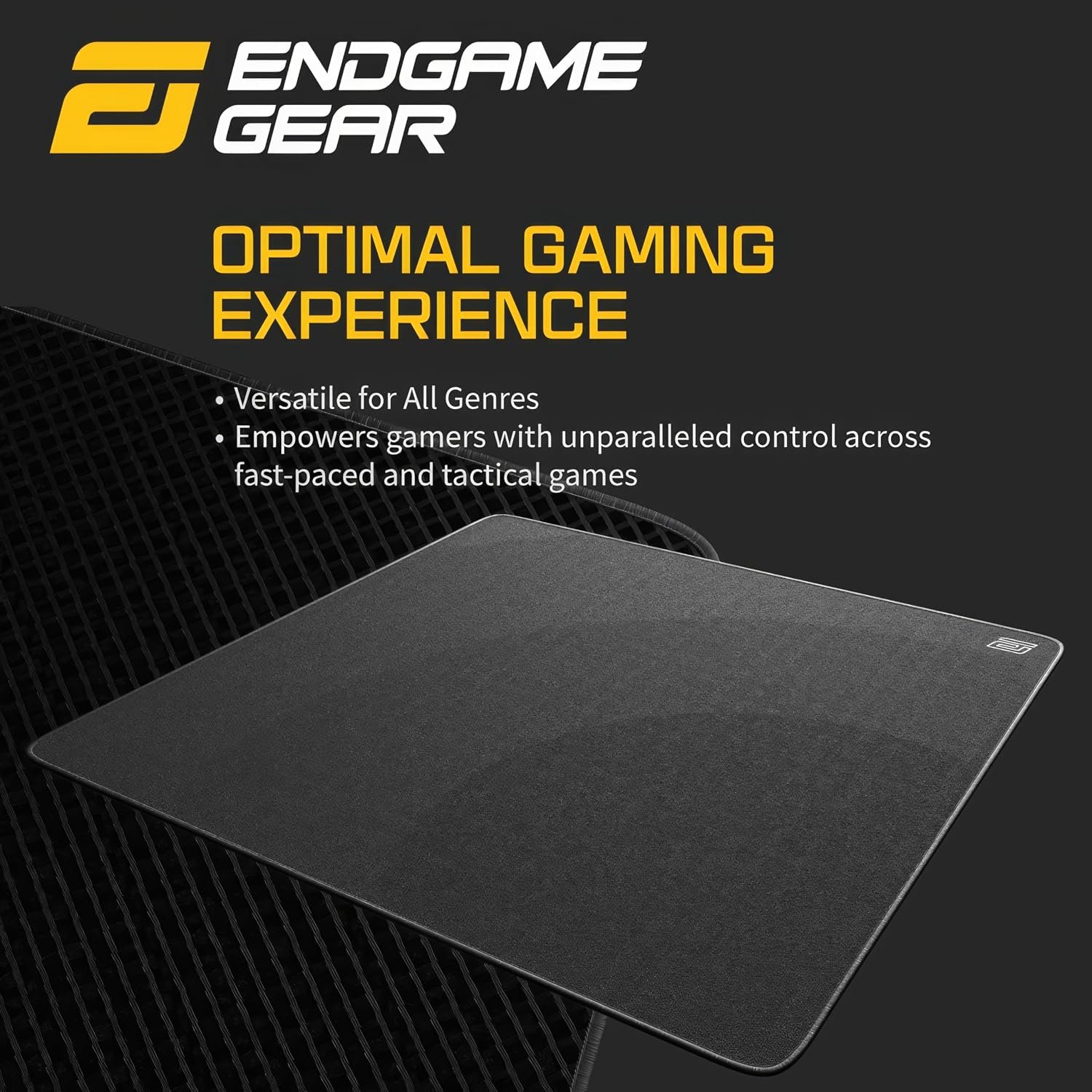
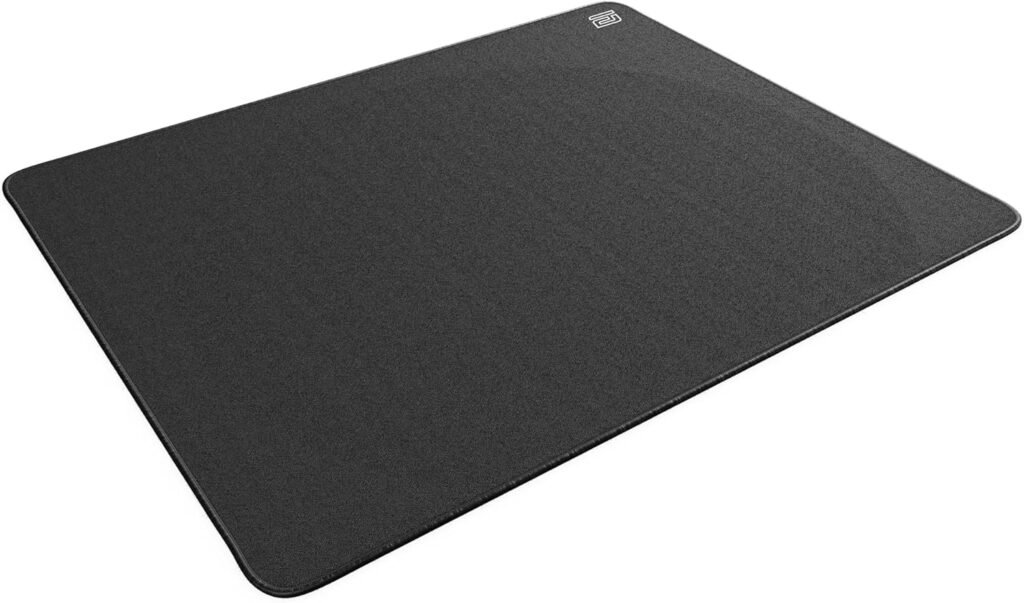
ENDGAME GEAR EM-B Plus Gaming Mouse Pad – 500x500mm, 3mm Thick PORON Base, Sub-Surface Stitching, Eco-Friendly Packaging | Esports gaming mouse pad, 3mm PORON base, sub-surface stitching, consistent glide, eco-friendly
A $63.99 mouse pad has to do more than look premium. The real question is whether the construction gives you a steadier, more predictable surface than a conventional cloth alternative, especially if you play for hours each week. The ENDGAME GEAR EM-B Plus is built around a 500x500mm square surface, a 3mm Japanese PORON base, sub-surface stitching, and flat recyclable packaging.
That combination suggests a pad aimed at competitive PC gamers rather than shoppers who simply need something beneath a mouse. The square layout is meant to balance wide movement with controlled aiming, so you can make a fast turn in an action game and still perform small corrections in a tactical FPS. It should also suit low-sensitivity players who regularly run out of room on smaller pads.
The case for buying it in depends on whether you value consistency more than minimum price. The listing shows $63.99 and only units available at the time of review. That stock figure isn’t evidence of quality, but it is a practical reason to check the live listing for current availability, price, and customer information before making a decision.
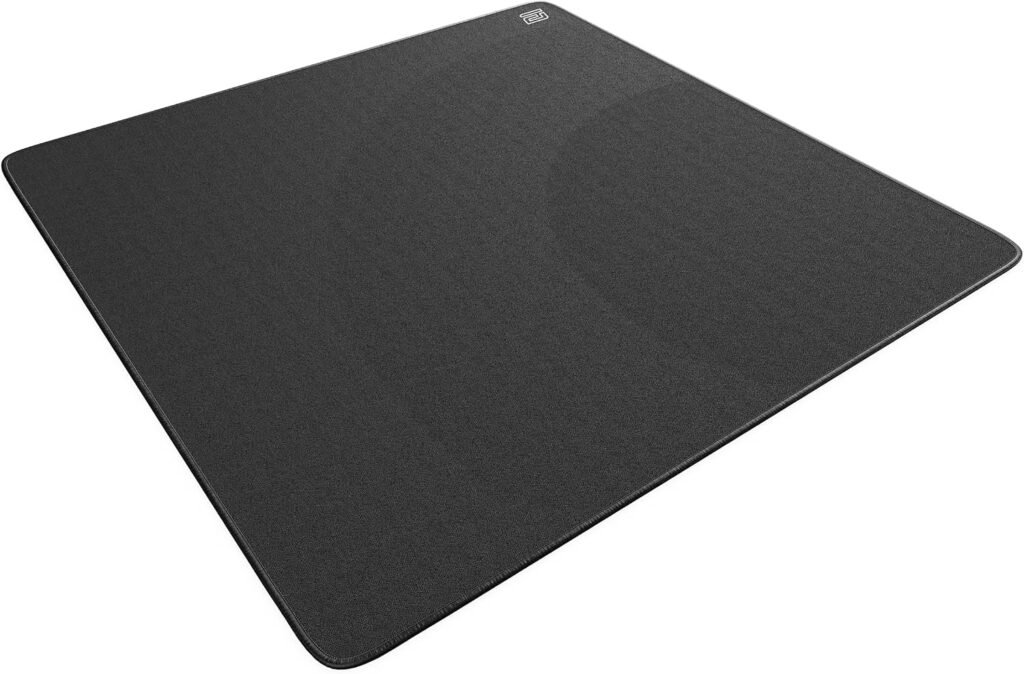

ENDGAME GEAR EM-B Plus: specifications and first impressions
The core specification is straightforward, but the materials explain why this pad costs more than a basic cloth model. You are paying $63.99 for a construction focused on a stable foundation and a less intrusive edge, not merely for extra surface area.
| Specification | What it means |
|---|---|
| Surface dimensions | 500x500mm |
| Thickness | 3mm |
| Base | Japanese PORON |
| Edge construction | Sub-surface stitching |
| Packaging | Recyclable flat cardboard box with wax-paper protection |
A 500x500mm footprint sits between a compact or medium pad and a full extended desk mat. You get useful room for broad arm movements without committing the whole desk to a mouse surface. That is particularly sensible if your keyboard, notebook, or other equipment needs to remain beside the pad.
The 3mm construction is a middle ground: enough material to provide some cushioning and help maintain desk contact, but not an especially thick pad designed to feel plush or bulky. Based on the supplied description, the intended impression is controlled and consistent rather than a promise of one exact speed or texture. Your own mouse feet and desk surface will complete that experience.
How the EM-B Plus surface balances speed and control
The product description says the surface harmonizes dynamic friction and static friction. Dynamic friction is the resistance you feel while the mouse is already moving; static friction is the initial resistance when you begin movement or stop making a correction. A useful gaming surface needs both to feel predictable, because effortless swipes without reliable stopping can be just as frustrating as a surface that feels sticky.
In a fast-paced game, balanced resistance should give you room for a rapid turn without making the cursor feel uncontrolled at the end of the movement. In a tactical FPS, the same idea matters during tiny corrections around a target. Office navigation and creative software can benefit too, since a consistent surface makes repeated cursor movements less distracting.
Consistency matters more than raw speed when you practise aim. If you repeat the same motion hundreds of times, an unpredictable start or stop can become part of your muscle memory. Still, don’t treat the EM-B Plus as universally fast or slow. Mouse feet, sensitivity, humidity, and personal preference can change how the same pad feels.
- Use the mouse and sensitivity settings you normally play with.
- Test several large swipes, then perform small target corrections.
- Repeat the test across multiple sessions rather than deciding after one minute.
- Ask whether stopping feels repeatable, not simply whether movement feels quick.

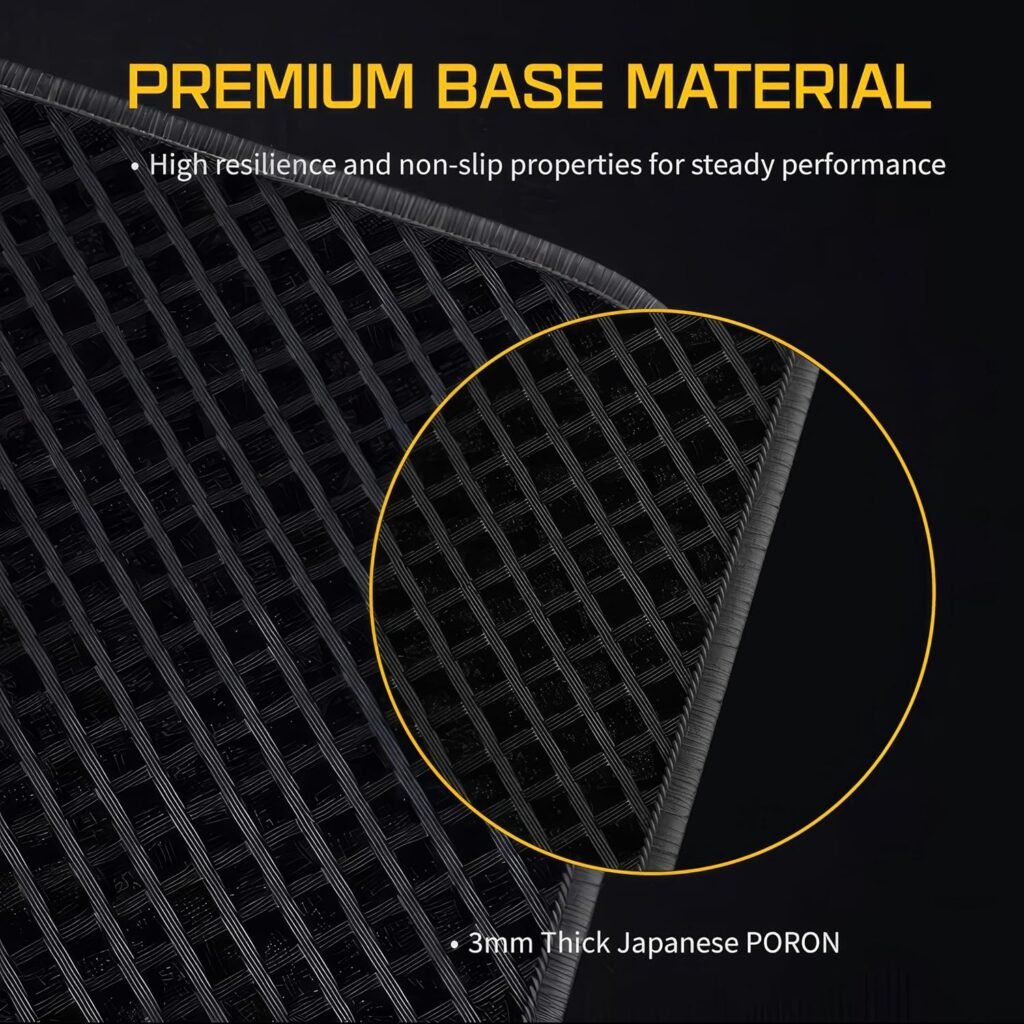
The 3mm Japanese PORON base and non-slip performance
The Japanese PORON base is 3mm thick and is described as resilient, consistent in thickness, and non-slip. In practical terms, the base is doing more than cushioning your forearm: it provides the foundation beneath the tracking surface and is intended to reduce unwanted movement while you aim.
That stability is most useful for low-sensitivity play, where a broad sweep can put more lateral force through the pad. A gripping base can also help the surface bridge minor imperfections in a desk, though that result depends on dust, cleanliness, and the desk’s finish. Grip is not the same as permanent adhesion; no supplied information supports a promise that it will never shift on every material.
Give the base a fair test before deciding that it works or fails. A dirty desk can undermine even a well-designed underside, and a pad that has not settled flat may feel different from one positioned correctly.
- Clear the desk and remove dust, crumbs, and residue.
- Place the pad squarely rather than dragging it into position.
- Smooth the surface from the centre outward.
- Let it settle fully before testing hard swipes.
- Recheck the perimeter if you notice movement during play.
This setup is simple, but it separates the base’s performance from problems caused by the surface underneath it.
Sub-surface stitching: comfort, edges, and long-session use
Sub-surface stitching places the stitched construction below the main playing surface, creating an edge intended to sit flatter than a raised stitched border. That detail can matter more than it sounds. During a long session, your hand or forearm may travel near the perimeter repeatedly, and a prominent seam can become a small but persistent interruption.
The likely comfort advantage is straightforward: a flatter boundary gives your hand less of an edge to catch against when you move close to the outside. That isn’t a medical or ergonomic guarantee, and the right feel will depend on your posture and how much of your arm rests on the pad. Some players barely touch the edge; others notice every change in height.
The trade-off is that the supplied data gives no durability rating or warranty term for the perimeter. A flatter edge may feel unobtrusive at first, but you should still monitor it over time for lifting, rough spots, fraying, or separation.
- Run a fingertip around all four edges after unboxing.
- Check whether the stitching feels even and whether any section lifts.
- Photograph a defect before using the pad extensively.
- Keep those photos and your order details if a return or warranty question arises.
This inspection takes less than a minute and gives you a useful record of the pad’s original condition.
Flat recyclable packaging and unboxing experience
The EM-B Plus arrives in a robust recyclable cardboard box with a protective wax-paper layer rather than a conventional rolled presentation. Flat packaging addresses a common mouse-pad annoyance: receiving a surface that needs days to lose a curl or has edges that keep lifting from the desk.
Flat shipping doesn’t guarantee perfection, so inspect the delivery before throwing the packaging away. Look for crushed cardboard, marks on the playing surface, damaged edges, and any area that refuses to lie flat. The box and wax paper also give you useful protection if you need to return the product.
- Open the cardboard carefully and remove the wax paper without dragging it across the surface.
- Clear and clean the desk before placement.
- Position the pad, then smooth it from the centre toward each edge.
- Check that the playing surface lies flat and the perimeter is seated.
- Only then test mouse movement and base grip.
The environmental claim should remain precise. The packaging is described as recyclable and eco-friendly, but the supplied information does not establish the full material footprint of the mouse pad itself. That distinction lets you appreciate the packaging choice without assuming a broader sustainability certification.
What Customers Are Saying About the ENDGAME GEAR EM-B Plus
The supplied product data does not include a current star rating or review count. Because those figures are unavailable here, it would be dishonest to claim that the EM-B Plus is rated a particular number out of five or to attribute a pattern to verified buyers. Check the live listing for the current rating, review total, and the dates of the newest reviews before ordering.
That leaves two kinds of evidence to separate carefully. The manufacturer describes balanced dynamic and static friction, a resilient 3mm Japanese PORON base, sub-surface stitching, and recyclable flat packaging. Those are product-description claims, not independent customer observations.
When the listing displays customer feedback, organise it around practical themes rather than one memorable comment. Look for repeated discussion of glide consistency, stopping control, surface comfort, base stability, edge quality, packaging condition, and whether the $63.99 price feels justified. A single complaint about a rough edge or a single enthusiastic comment about tracking cannot establish a general result.
Give more weight to the same observation appearing across several reviews, and read recent comments alongside older ones. Newer feedback can reveal changes in packaging, production, or stock batches. Also look for criticism that reflects preference rather than a defect: a player who wants an extremely fast pad may dislike a balanced surface even if another player considers that same feel ideal.
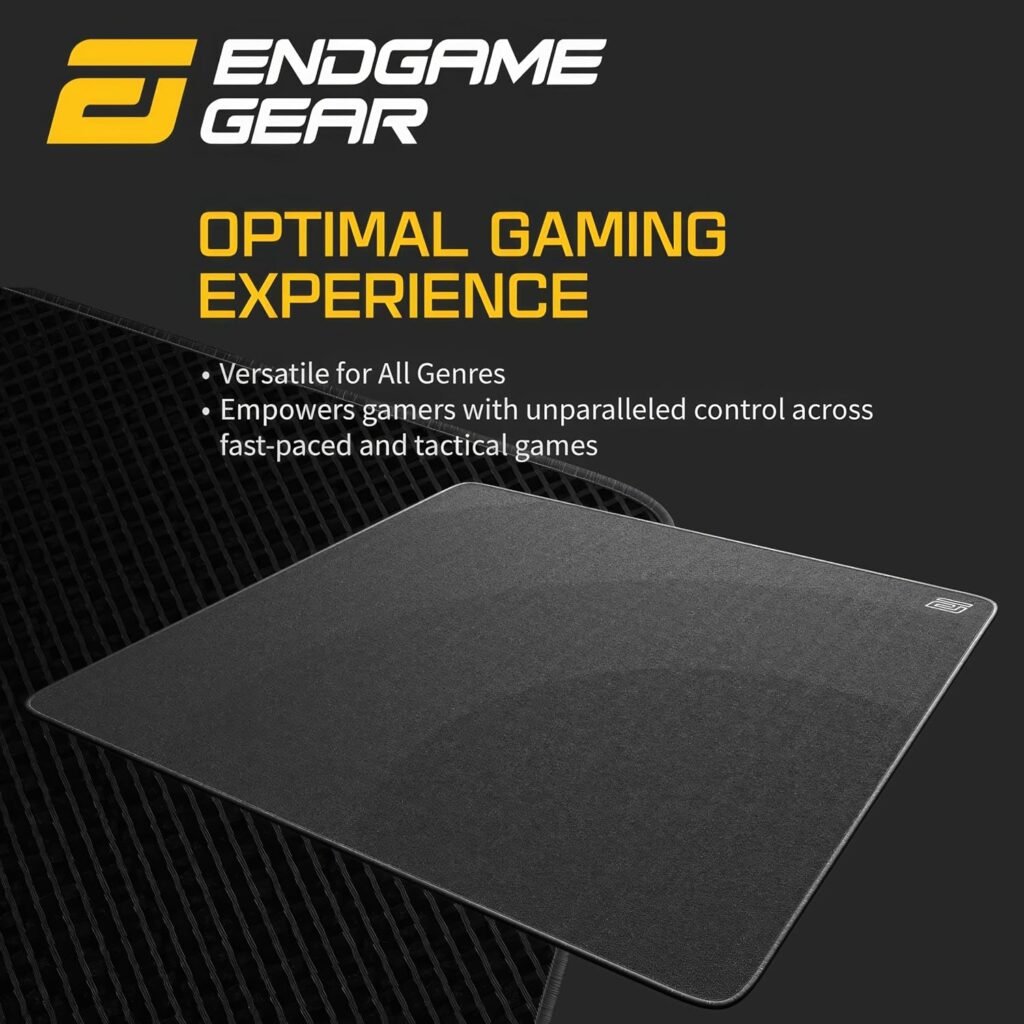
Who should buy the ENDGAME GEAR EM-B Plus?
The EM-B Plus is most naturally aimed at competitive and enthusiast PC gamers who want broad horizontal movement without moving to a keyboard-sized desk mat. Low-sensitivity players are the clearest match because they tend to value uninterrupted arm travel and a foundation that stays settled while they make large turns.
Tactical FPS players may prefer the stated balance between movement and stopping because small corrections need to feel controlled rather than floaty. Players in faster action games may value the same room for wide swipes. For office work, creative software, and ordinary desktop navigation, a stable, consistent surface can be preferable to a compact pad, although you may not benefit enough to justify the premium if gaming is occasional.
It is less suitable if your first priority is the lowest possible cost, if you need a surface large enough for both keyboard and mouse, or if you already know that you prefer an extremely fast or extremely slow texture. The right decision comes down to a few questions:
- Do you have enough clear desk space for the square format?
- Does your sensitivity require broad mouse travel?
- Do you prefer balanced friction and predictable stopping?
- Will your hand or forearm regularly contact the edge?
- Will you use the pad often enough to make $63.99 reasonable?
If you answer yes to most of these, the construction is more relevant than the branding.
ENDGAME GEAR EM-B Plus versus competing gaming mouse pads
The most useful comparison is not simply which pad is “best.” It is which construction matches the way you play and what you are willing to spend. The SteelSeries QcK Gaming Mouse Pad is the familiar cloth-pad alternative: it is offered in multiple size and thickness options across its range and is generally aimed at shoppers who want a straightforward, widely recognised gaming surface. Check the exact listing because construction and price vary by version.
The Pulsar Paraglide XL Esports Level Premium Gaming Mouse Pad is a closer enthusiast comparison because it also targets esports-style use. Its exact dimensions, surface speed, edge treatment, price, and availability depend on the particular listing, so compare the current variant rather than relying on the product family name.
| Product | Best fit | Key construction point | Question to ask |
|---|---|---|---|
| ENDGAME GEAR EM-B Plus | Competitive players wanting a square enthusiast pad | PORON base and sub-surface stitching | Will the balanced feel justify $63.99? |
| SteelSeries QcK Gaming Mouse Pad | Value-focused cloth-pad shoppers | Cloth-pad range with multiple variants | Which size and thickness is in the listing? |
| Pulsar Paraglide XL | Players comparing premium esports surfaces | Variant-specific surface and edge design | How does the exact version feel and cost? |
The EM-B Plus stands out on the supplied specification sheet through its square format, Japanese PORON foundation, flatter stitched edges, and flat recyclable packaging. Prices, stock, ratings, and sizes can change, so compare those details immediately before purchase.
Is the $63.99 price justified?
At $63.99, the EM-B Plus cannot justify itself through size alone. Large cloth pads are widely available, and an occasional player may get nearly all the practical benefit from a cheaper alternative. The premium has to come from the combination of the 3mm Japanese PORON base, balanced-friction surface, flatter stitched perimeter, and protective flat packaging.
For someone gaming several hours each week, the cost-per-use argument is reasonable. A surface you touch every session can be worth paying more for if its movement and stopping feel remain predictable and its foundation stays comfortable under repeated use. But that is a personal calculation, not a guarantee of a fixed lifespan; the supplied data includes no durability period.
The listing’s “only left in stock” message is worth treating as a purchasing detail, not proof that the product is better. Stock can change, and scarcity should never replace checking the evidence. Before ordering, use this price-check routine:
- Record the current $63.99 price and the exact product variant.
- Check the live star rating and total review count.
- Read recent positive and negative reviews for repeated patterns.
- Compare the current prices and sizes of the SteelSeries QcK and Pulsar Paraglide XL.
- Review the available return terms and confirm that the construction matches your preference.
If you play frequently and specifically want these materials, the price can be defensible. If you mainly need a functional surface, it is a substantial premium.
How to set up and maintain the mouse pad
Set the pad up carefully before judging its glide or stability. Clear the desk, remove debris, and position the surface squarely. Flatten it from the centre outward, then confirm that your mouse has enough travel room at your chosen sensitivity without repeatedly reaching the perimeter.
Consistent performance depends on the contact surfaces staying clean. Dust and food residue can affect movement, while moisture can change the feel of the playing surface. Clean the mouse feet as well as the pad; otherwise, you may blame the surface for contamination carried by the mouse.
- Follow the manufacturer’s care instructions for routine cleaning.
- Use gentle cleaning rather than aggressive scrubbing.
- Avoid excess water, heat, and harsh chemicals unless specifically approved.
- Allow the surface to dry fully before gaming.
- Periodically inspect the stitched perimeter for lifting, fraying, or separation.
If you notice a change, photograph it and keep your purchase information in case a return or warranty claim becomes necessary. These steps can reduce avoidable wear, but they cannot promise a particular lifespan because no fixed durability period is supplied.
The sensible maintenance goal is not to make the pad last forever. It is to keep dust, moisture, and rough handling from becoming the reason its feel changes sooner than expected.
Pros and Cons
Pros
- 500x500mm square surface offers generous room without requiring a full desk mat.
- 3mm Japanese PORON base is designed for consistent thickness, cushioning, and non-slip performance.
- Sub-surface stitching aims to keep the perimeter flatter and less intrusive during long sessions.
- Balanced dynamic and static friction is intended to suit both fast movement and precise aiming.
- Flat recyclable cardboard packaging with a wax-paper protective layer should reduce the risk of arriving tightly curled.
Cons
- The $63.99 price is high compared with conventional cloth mouse pads.
- The supplied listing does not provide a durability rating or warranty term for the stitched perimeter.
- The actual glide will vary with mouse feet, sensitivity, humidity, desk finish, and personal preference.
- Only units are shown as available at the time of review, so stock and listing details should be checked before ordering.
Final Verdict
Key Takeaways
- The ENDGAME GEAR EM-B Plus combines a 500x500mm square surface with a 3mm Japanese PORON base and flatter sub-surface stitching.
- Its balanced-friction design is intended to support both broad swipes and controlled corrections, but perceived glide remains personal and hardware-dependent.
- Flat recyclable packaging is a thoughtful delivery choice, although it does not establish the full environmental footprint of the mouse pad itself.
- At $63.99, it makes the most sense for frequent gamers who will use the construction advantages regularly rather than occasional players seeking the cheapest option.
Frequently Asked Questions
What rating does the ENDGAME GEAR EM-B Plus have?
The product data does not provide a current star rating or review count. It would be misleading to invent those figures, so check the live listing for the latest customer evidence before ordering.
Is the EM-B Plus large enough for low-sensitivity gaming?
The stated size is 500x500mm, giving you more room than a typical medium pad while avoiding the footprint of a keyboard-and-mouse desk mat.
Does the PORON base prevent the pad from moving?
The pad uses a 3mm Japanese PORON base, which is intended to provide cushioning, consistent thickness, and non-slip performance. It is not described as permanently adhesive on every desk surface.
Is this a fast or control-oriented mouse pad?
It is best suited to players who want a balanced surface rather than an extremely fast or extremely slow pad. Mouse feet, sensitivity, humidity, and your preferred stopping feel will affect the result.
Disclosure: As an Amazon Associate, I earn from qualifying purchases.