
Product overview: Unicorn Academy: Island of Magic – Nintendo Switch
A $39.99 game with no published playtime, rating, or customer feedback is a purchase that deserves a little caution. Unicorn Academy: Island of Magic – Nintendo Switch is scheduled for release on November 17, 2026, so this review can assess the confirmed concept but not final performance or longevity. The Unicorn Academy game looks most appealing to younger players and fans who enjoy creating a character, forming a bond with a unicorn, exploring a magical setting, and completing accessible missions.
The product description confirms a first-year student premise, rider and unicorn customisation, Unicorn Island exploration, hidden paths, elemental magic, and team missions featuring Sophia, Ava, Layla, and other series heroes. Those details suggest a relaxed adventure rather than a demanding combat-focused title. At this stage, though, the Unicorn Academy game should be treated as a preview of the proposed experience, not a finished-product assessment.
Several buying questions remain open. The listing does not confirm campaign length, technical performance, local multiplayer, downloadable content, internet requirements, storage space, or parental controls. It also doesn’t establish whether the listed price applies to a physical edition, a download code, or another format. The sensible early view is “worth watching” for the right child, but not an automatic $39.99 recommendation before launch testing.

How the Unicorn Academy game works
You begin as a newly created first-year student at Unicorn Academy, then set out across Unicorn Island. That setup gives you a role in the world instead of asking you to play only as a fixed version of a series character. For a child who likes choosing an avatar’s look and imagining a personal story, the Unicorn Academy game has a clear starting hook.
The confirmed progression loop appears straightforward: customise a rider, meet and bond with a unicorn, discover more about its powers, skills, and personality, explore new areas, and complete missions. The wording implies that the relationship is connected to discovery, but it does not confirm friendship meters, upgrade trees, statistics, or a particular reward structure. Those systems need hands-on verification rather than guesswork.
This structure should suit children who enjoy role-play and self-expression. They can shape the student and companion, then use exploration and missions to give that pair a sense of purpose. The key question is whether the game turns those choices into meaningful progression or simply presents cosmetic selections around a short story. After release, look for gameplay footage showing how often the bond changes what you can do, where you can go, or how missions unfold.
Key features deep-dive: character and unicorn customisation
Character creation is one of the clearest attractions. The description confirms rider outfits, hairstyles, and appearance choices, allowing you to make a student who feels distinct from the established heroes. That matters in a licensed children’s game because personal ownership can keep a child engaged between story objectives. Instead of borrowing someone else’s identity, you get to decide how your academy student looks.
The likely replay benefit comes from experimentation and attachment rather than competitive scoring. A child may enjoy changing an outfit for a new mission or creating a rider that fits an imagined backstory. Yet the listing doesn’t say how many items are available, whether options are unlocked through play, or what gender and body choices are included. It also doesn’t confirm whether cosmetic decisions change gameplay or remain visual.
Unicorn customisation is a separate part of the appeal. The product information says you can customise the unicorn, while also describing a distinct personality, powers, and skills that become clearer as your bond grows. That relationship angle could provide more depth than a simple appearance editor, but the available information doesn’t establish how interactive it is.
Once the Unicorn Academy game launches, check three things: the breadth of rider and unicorn cosmetics, whether most choices are available immediately or earned, and whether customisation affects abilities or only appearance. Screenshots alone won’t answer the last question; look for gameplay explanations and detailed buyer comments.
Key features deep-dive: exploring Unicorn Island
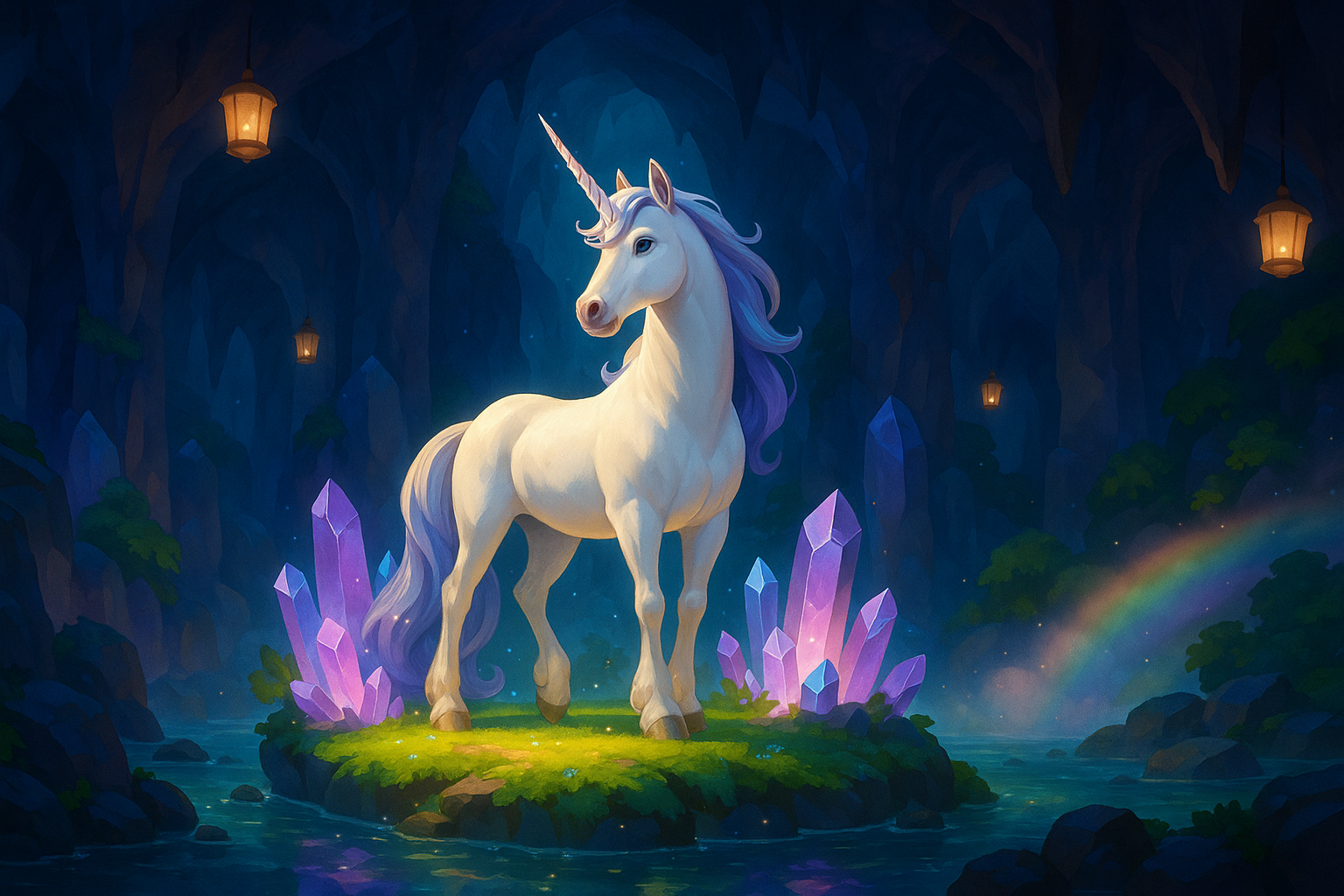
Unicorn Island is presented as an exploration setting rather than a collection of menus. You are expected to uncover hidden paths and use elemental magic to overcome challenges, which gives the Unicorn Academy game a curiosity-driven rhythm. The appeal should be strongest for children who like wandering, spotting something unusual, and finding out whether a new ability opens a route.
“Hidden paths” sounds promising, but it doesn’t tell you whether the island is open world, divided into compact zones, or restricted to mission-specific routes. Map size, free-roaming limits, fast travel, and backtracking are all unconfirmed. Those distinctions matter: a small, carefully designed area can be enjoyable, while a large map may feel empty if exploration has few rewards.
Elemental magic appears to be the central puzzle or obstacle-solving feature. The listing doesn’t identify the number of elements, explain how abilities are learned, or show whether challenges are designed for independent play by younger children. When launch footage becomes available, watch for clear instructions, forgiving failure conditions, and puzzles that teach mechanics without requiring advanced reading or timing skills.
Also assess camera control, navigation clarity, loading times, and performance in handheld mode. These practical details can affect a child’s enjoyment more than promotional artwork. The Unicorn Academy game needs hands-on testing before anyone can fairly judge whether its island feels inviting or frustrating.
Missions, series characters, and gameplay variety
The description confirms team-up missions with Sophia, Ava, Layla, and other heroes from the Unicorn Academy series. That connection should help existing fans feel that they are visiting a familiar universe rather than playing an unrelated fantasy adventure. For a child who knows the books or television series, recognising these characters may make ordinary objectives feel more meaningful.
There is an important limit to what the listing tells us. It doesn’t say whether Sophia, Ava, and Layla are playable, permanent companions, occasional helpers, or mission-givers. It also doesn’t explain how much dialogue they have or whether the story assumes prior knowledge. The Unicorn Academy game will be more welcoming to new players if it explains its world clearly rather than relying on the audience to know every character.
Variety will probably come from four areas: story missions, island discovery, elemental challenges, and cosmetic rewards. That is a sensible foundation, but repeated objectives can make a child lose interest quickly. After release, check mission repetition, dialogue quality, difficulty options, accessibility settings, save slots, and whether a new viewer can follow the main story without watching the series first.
Pay particular attention to how missions use the unicorn relationship and magic. If every task reduces to travelling to a marker and collecting an item, the licensed characters may be doing most of the work. If objectives encourage different abilities, exploration routes, and cooperation with series heroes, the structure could feel more satisfying. The Unicorn Academy game needs evidence on that point, not just a list of named characters.
Nintendo Switch experience and family suitability
This is a Nintendo Switch title, but the supplied information doesn’t specify whether it supports handheld, TV, and tabletop play. Most families will also want the required storage space, internet requirements, and edition format before ordering. Don’t assume multiplayer, voice acting, motion controls, or cloud-save support simply because the game is on Switch; none of those features is confirmed here.
The announced themes point toward a child-friendly audience: character creation, friendship with a unicorn, fantasy exploration, elemental magic, and team missions. That combination should suit imaginative players who prefer a gentle adventure to competitive play. The final age rating is still essential, since themes and rating classifications are not interchangeable.
Use this buying check when the final listing appears:
- Confirm that the edition you are viewing still lists November 17, as the release date.
- Read the published age rating and any parent guidance.
- Check the download size or cartridge requirements against the console’s available storage.
- Confirm supported play modes and whether an internet connection is required.
- Ask whether the child already knows Sophia, Ava, Layla, or the wider Unicorn Academy setting.
That last step helps set expectations. A dedicated fan may overlook a simpler mission structure because the world and characters are familiar, while a child new to the franchise may need stronger standalone storytelling. The Unicorn Academy game should be judged against the child’s interests, not against every major action title on Switch.

What Customers Are Saying
There is no honest customer-review pattern to report before the scheduled November 17, release. The supplied listing provides no rating, review count, or buyer comments, so claims about what “many customers” think would be invented. The Unicorn Academy game needs to be revisited after launch, when shoppers can assess the rating, the volume of reviews, and comments from verified purchasers.
Future review analysis should focus on specific questions. Do children enjoy creating both rider and unicorn? Does exploration feel rewarding, or are hidden paths mostly decorative? Are elemental challenges understandable without constant adult help? Do missions remain varied after the opening hours? These answers will tell you more than a single star score.
Potential praise themes include familiar series characters, creative control, and a gentle fantasy setting. Possible concerns include repetitive tasks, limited cosmetic choice, short playtime, or technical problems. None of those is an established strength or fault yet; they are the areas where launch evidence is most needed.
When reading early reviews of the Unicorn Academy game, give greater weight to detailed comments that identify a child’s age, play mode, completion time, and Switch model. A one-line “great game” or “too easy” review lacks context. Look for repeated observations across several buyers, especially comments describing loading, controls, navigation, and whether a child returned to the game after finishing the main story.
Unicorn Academy: Island of Magic versus similar Nintendo Switch games
The most useful comparison is about the kind of child each game serves, not unverified rankings or current prices. My Little Pony: A Maretime Bay Adventure shares the appeal of family-friendly licensed characters, exploration, and accessible objectives. It may be the more natural alternative for a child whose favourite franchise is My Little Pony rather than Unicorn Academy.
Horse Club Adventures 2: Hazelwood Stories is another relevant option for shoppers prioritising horse care, riding, exploration, and customisation. Its appeal is centred on a horse-adventure structure, whereas the Unicorn Academy game is defined by a licensed magical setting, a bond with a unicorn, elemental abilities, and a created student.
| Game | Main activity | Customisation emphasis | Magic or fantasy | Best suited to |
|---|---|---|---|---|
| Unicorn Academy: Island of Magic | Island exploration and missions | Rider and unicorn | Elemental magic and unicorn powers | Unicorn Academy fans who enjoy role-play |
| My Little Pony: A Maretime Bay Adventure | Family-friendly exploration and objectives | Check the current listing | Licensed fantasy setting | My Little Pony fans |
| Horse Club Adventures 2: Hazelwood Stories | Horse care, riding, and exploration | Horse-adventure customisation | Less focused on elemental magic | Players seeking a broader horse theme |
Verify competitor availability and current listing details before publishing or purchasing. Choose this game for Sophia, Ava, Layla, unicorn bonding, elemental challenges, and rider creation. Consider the alternatives if your child prefers another franchise or a more traditional horse-adventure structure; the Unicorn Academy game is strongest when its series identity is part of the appeal.
Who should buy it?
The strongest audience is younger Unicorn Academy fans who enjoy imaginative role-play, avatar creation, companion relationships, and straightforward missions. The Unicorn Academy game gives that audience a personal student, a unicorn relationship, a magical island, and familiar heroes. Those ingredients may matter more to a committed fan than technical ambition or a highly complex progression system.
It may also suit a child who wants a relaxing fantasy adventure. The confirmed activities focus on exploration, friendship, elemental abilities, and team missions rather than competitive play. That doesn’t prove the game is easy or entirely stress-free, but its advertised premise is gentler than a combat-heavy action game. Parents should still wait for the published age rating and difficulty information.
You may want to wait if your player expects a long, technically demanding adventure, confirmed accessibility options, multiplayer, or extensive post-game content. None of those requirements is addressed by the supplied product description. Buying early would therefore mean accepting unanswered questions rather than choosing from a fully documented feature list.
A practical decision process is simple: watch launch gameplay, read detailed buyer experiences, confirm the age rating and technical requirements, then compare the $39.99 price with the child’s expected playtime and interest in the franchise. If the child rarely engages with Unicorn Academy characters, a similarly priced alternative may offer better value. If the licence is the main attraction, the Unicorn Academy game deserves a closer look once evidence arrives.
Price and value assessment at $39.99
The listed price is $39.99, and no sale price, bundle, or discount is confirmed before release. Since the scheduled launch is November 17, 2026, you should assess the standard price against confirmed content rather than assume a promotional offer will be available. The Unicorn Academy game is not yet in a position to justify its cost through customer ratings or measured playtime.
What you are paying for, based on the description, is a customisable student, a customisable unicorn, exploration across Unicorn Island, hidden paths, elemental-magic challenges, and missions with Sophia, Ava, Layla, and other series characters. That is a coherent package for a fan-focused adventure. It could feel reasonable at $39.99 if the bond develops meaningfully, the island rewards curiosity, missions vary, and cosmetics remain useful throughout the story.
Value would be weaker if launch testing reveals a short campaign, repeated tasks, shallow relationship mechanics, very few cosmetic choices, or technical problems. These are evaluation criteria, not confirmed faults. The missing information is precisely why a launch review should examine the whole experience rather than judge the feature list alone.
Fans who already want a Unicorn Academy game may find the standard price easier to justify because the characters and setting have personal value. Uncertain buyers should compare launch reviews first and consider waiting for a discount if the available content looks narrow. The right question is not simply whether $39.99 is high or low; it is whether your child will use the customisation, exploration, and series connection enough to support that price.
What to check before buying the Nintendo Switch game
The final product page should answer several unresolved specification questions. Check the age rating, file size, physical or download format, supported play modes, language options, internet requirements, and whether any additional purchases are involved. These details can affect suitability and cost, especially for families sharing a console or managing limited storage.
Confirm that the final release date remains November 17, and that the $39.99 price applies to the exact edition you intend to purchase. A product page can change its format, regional availability, or included content before launch. Read the edition description carefully instead of relying only on the title.
After release, recent customer reviews should provide evidence about loading times, controls, bugs, difficulty, story length, and handheld performance. Look for comments that explain who played, how long they played, and which Switch mode they used. Repeated, specific observations are more useful than isolated praise or criticism.
In short, the Unicorn Academy game is worth watching for fans of the series and children who value customisation, unicorn friendship, and magical exploration. Its final value depends on launch details and real player feedback. Until those arrive, treat $39.99 as a provisional price for a promising concept rather than a fully proven recommendation.
Pros and Cons
Pros
- Creates a first-year student with rider appearance, outfit, and hairstyle options.
- Combines unicorn bonding, personality discovery, exploration, hidden paths, and elemental-magic challenges.
- Includes Sophia, Ava, Layla, and other familiar heroes from the Unicorn Academy series.
- The gentle fantasy premise should appeal to younger players who prefer creative role-play over demanding action.
Cons
- The game is unreleased, so there are no trustworthy customer ratings or buyer comments yet.
- Play length, performance, local multiplayer, downloadable content, parental controls, and accessibility features are not confirmed.
- The number of cosmetic options, elemental abilities, missions, and unlockable items is currently unknown.
- The $39.99 value cannot be judged confidently until launch reviews reveal the campaign length and amount of gameplay variety.
Final Verdict
Key Takeaways
- The game is scheduled for November 17, and is listed at $39.99, but it has no launch customer feedback yet.
- Confirmed features include rider and unicorn customisation, Unicorn Island exploration, elemental magic, and missions with series heroes.
- Its strongest audience is younger Unicorn Academy fans who enjoy role-play and gentle fantasy exploration.
- Play length, performance, multiplayer, accessibility, storage, and several Switch specifications remain unconfirmed.
- Check launch reviews and the final product page before deciding whether the standard price offers enough content.
Frequently Asked Questions
When will Unicorn Academy: Island of Magic release on Nintendo Switch?
The listed release date is November 17, 2026. Because the game is unreleased, check the final product page before purchasing in case the date changes.
How much does Unicorn Academy: Island of Magic cost?
The listed price is $39.99. No discount, bundle, or sale price is confirmed in the supplied product information.
What features are confirmed in the game?
The description confirms rider and unicorn customisation, Unicorn Island exploration, hidden paths, elemental magic challenges, and missions involving Sophia, Ava, Layla, and other series heroes. Play length, multiplayer, downloadable content, and performance remain unverified.
Who is this Nintendo Switch game for?
It appears most suitable for younger fans of the series who enjoy character creation, magical exploration, companion relationships, and straightforward missions. The final age rating should be checked when published.
Disclosure: As an Amazon Associate, I earn from qualifying purchases.