Qliphah in Providence's Shadow – PlayStation 5: Product Overview
A $29.99 game built around reading attacks before they happen could be excellent—or frustrating if its interface gets in the way. Qliphah in Providence’s Shadow is scheduled to release on PlayStation on October 19, 2026. The supplied listing presents it as a stylized horror adventure with a Tactical Counter-Timeline combat system, changing environments, and a mystery surrounding the World Collapse.
The listed Launch Edition price is $29.99. It includes the base game, bonus skins for Rena and Soma, and an extra battle called Voidfall. The description presents the skins as cosmetic items, while Voidfall appears to be playable content. The final product page should confirm whether the battle is available immediately and how the content is redeemed.
You will investigate locations shown on the map, encounter Anomalies, and watch the setting change as days pass and the day-night cycle shifts. Those ideas give the game a clear identity. However, you cannot yet judge loading times, frame-rate consistency, campaign length, bugs, accessibility, or long-term replay value. There is no established customer rating or post-launch review pattern at the time of writing.
Early appeal is strongest for players who want tactical planning without being locked into a purely turn-based format. If you prefer action games with simple controls and constant momentum, the timeline may require patience.

How Qliphah in Providence's Shadow Uses Timeline Combat
The Tactical Counter-Timeline is the defining feature. A dynamic gauge is designed to show the exact timing and nature of incoming attacks. Instead of waiting for an enemy to act, you are meant to inspect the forecast, select a skill, and attempt to interrupt the offensive before it lands.
The system also tracks cooldowns and lets you program skills against predicted attacks. In practical terms, a fight may involve three decisions: identify the incoming threat, choose the correct response, and decide whether to spend a useful ability now or save it for a later window. That structure could reward prediction and timing more than repeated button presses.
You can slow down or pause the action at any moment, according to the supplied description. Beginners may use that control often while learning enemy patterns. Experienced players may eventually keep combat moving, using the gauge as a quick reference rather than a reason to stop.
After release, you should pay attention to four details:
- Whether attack icons and timing windows remain readable on a television.
- Whether commands register quickly when the action resumes.
- Whether the tutorial explains counters without overwhelming you.
- Whether crowded encounters keep the forecast understandable.
The mechanic sounds flexible, but its success depends on presentation. A clever system loses value if effects, icons, or overlapping enemies hide the information you need.
From Deliberate Planning to Fast Action
Qliphah in Providence’s Shadow is advertised as more than a pause-and-plan combat game. The description says that combat can become aggressive and adrenaline-fuelled as your skill improves. That creates two intended approaches: maintain relentless momentum, or slow the fight and dissect enemy behaviour with care.
A fast player might study a forecast briefly, select an interrupt, and continue attacking. A methodical player may pause before each exchange, monitor cooldowns, and wait for a safer opening. Both styles should feel valid. If only one approach works against bosses, the advertised flexibility will be less meaningful.
The system appears likely to reward four forms of execution:
- Timing: selecting a response before an attack window closes.
- Prediction: recognising patterns instead of reacting to every event separately.
- Cooldown management: keeping key defensive or offensive skills available.
- Skill selection: using the right ability rather than attacking by habit.
Hands-on testing should cover ordinary Anomalies as well as major bosses. The key question is whether stronger players can move naturally from analysis to action. Pausing should be a tactical advantage, not a permanent requirement. You should also watch retry friction and checkpoint placement. A demanding fight feels fairer when restarting does not involve a long unskippable sequence.
Exploration, Investigations, and the World Collapse Mystery
The story advances as you visit locations shown on the map. Investigating those places can trigger combat, so exploration is not presented as a separate peaceful mode. You will likely move between locations, gather context, interact with characters, and prepare for encounters with Anomalies.
The setting is also designed to change with the passage of days and the cycle of day and night. The supplied description does not specify exactly what changes. It could affect atmosphere, routes, enemy appearances, story context, or the timing of investigations. You should therefore treat the feature as a promise of variation rather than proof that the map changes in a mechanically important way.
A good investigation structure makes each visit purposeful. Look for clues that explain the World Collapse, character interactions that alter your understanding, and environmental details that connect one location to another. A weaker structure would use changing lighting mainly as decoration while sending you between battles.
When evaluating the finished game, check the following sequence:
- Read the map before selecting the next location.
- Note whether the time of day changes available information or encounters.
- Track how often investigation produces combat.
- Judge whether discoveries change the mystery or merely unlock the next marker.
Map clarity and pacing will matter as much as the premise. Frequent combat can make investigations feel interrupted, while too much travel can weaken the story’s momentum.
Anomalies, Bosses, and Combat Variety
Anomalies are the principal hostile threat, and their forecasted attacks are meant to give you opportunities to predict and intercept. That design could make enemies more interesting than simple health bars. It may also allow each creature to test a different response, such as interrupting a heavy strike, avoiding a status effect, or waiting for a narrow timing window.
The finished game needs enough variety to justify the timeline system. Useful areas to examine include attack patterns, defensive options, status effects, arena layouts, and the number of timing windows presented during a fight. If every Anomaly uses the same forecast and counter, the interface may become routine quickly.
Bosses are the strongest test. A satisfying boss should demand a different timeline strategy, punish predictable behaviour, and provide clear chances to counter incoming attacks. Difficulty should come from understanding the pattern and executing the answer, not from hidden damage spikes or unclear warnings.
As a buyer, separate advertised mechanics from proven depth. Count how many distinct encounters meaningfully use the timeline rather than merely displaying it. Also check:
- How quickly you can retry after defeat.
- Whether checkpoints appear before demanding phases.
- Whether aggressive play and careful analysis both remain effective.
- Whether difficulty settings change timing demands or only enemy durability.
These details will show whether Qliphah in Providence’s Shadow has a deep combat foundation or one strong idea repeated across similar encounters.
Cel-Shaded Visuals and Unsettling Anomaly Design
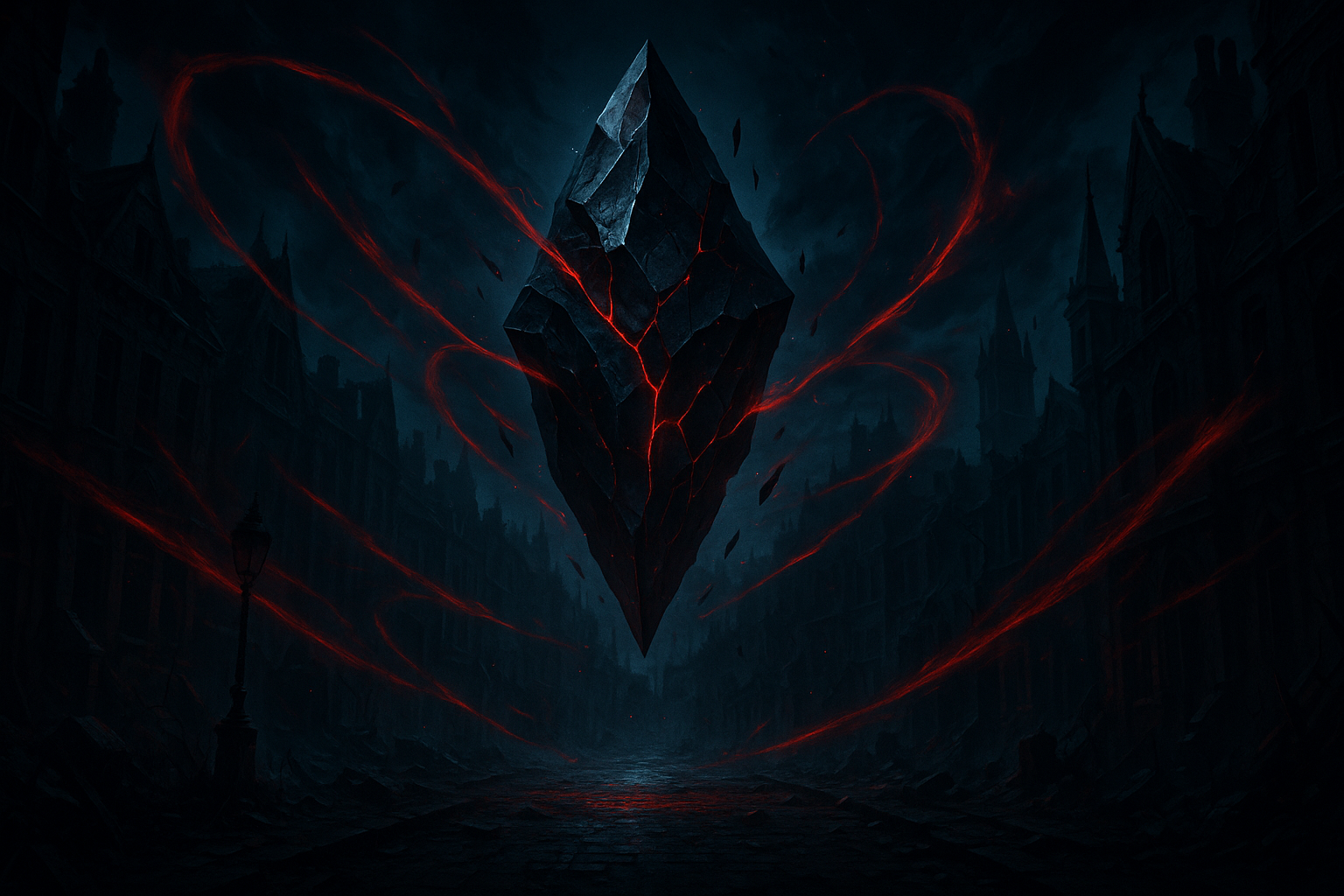
The visual direction contrasts vibrant cel-shaded environments with custom unsettling shaders for the Anomalies. That split could make enemies feel like intrusions into a colourful world. Strong outlines, distortion, altered lighting, and unusual surface effects may also support the horror tone without abandoning the game’s stylised presentation.
Visual identity matters here for more than atmosphere. The same effects that make an Anomaly memorable could make its attack cues harder to read. If distortion covers the timeline, obscures an animation, or blends enemies into a busy arena, the art direction may work against the combat design.
PlayStation testing should verify image quality rather than assume it from promotional wording. Check frame-rate consistency during large effects, camera clarity near bosses, loading behaviour between locations, and whether the screen remains readable during several simultaneous attacks. The supplied product data does not confirm a resolution mode, frame-rate mode, HDR support, or loading performance.
You can make a useful visual assessment by comparing a quiet investigation with a crowded battle. Look for stable outlines, readable enemy silhouettes, and warning effects that remain distinct at night. Also check whether environmental changes alter only colour and lighting or affect how you navigate the world.
Until gameplay testing and post-release customer reports are available, claims about technical performance remain unverified. The art direction is distinctive on paper, but clarity will determine whether it helps you play.
Soundtrack, Opening Theme, and Audio Direction
The supplied description highlights a pulse-pounding opening theme and in-game insert songs. That suggests music is intended to be part of the game’s identity, especially during battles and major story moments. It may appeal to players who enjoy action games where songs help define the mood of an encounter.
The complete release should show whether the soundtrack responds to combat intensity, boss phases, investigations, and the day-night cycle. Dynamic changes can make a fight feel like it is escalating. A static track list may still sound good, but it would provide less connection between the audio and the timeline’s changing pressure.
Audio balance is especially important here. You may need to hear warning cues while watching attack forecasts, cooldowns, and enemy movement. Loud music should not bury a crucial sound effect, and voice work should remain intelligible during dense battles.
When testing the audio mix, listen for:
- Distinct warning sounds for different attack types.
- Clear impact effects that confirm a successful interruption.
- Balanced dialogue, music, and effects at default settings.
- Separate volume controls for players who need to emphasise gameplay cues.
The product description confirms the presence of an opening theme and insert songs, but it does not establish their quality or the final mix. Voice options, subtitle support, and audio accessibility should be confirmed on the finished PlayStation listing.

Launch Edition Bonus DLC: What You Receive
The Launch Edition includes exactly three advertised bonuses: a skin for Rena, a skin for Soma, and the extra Voidfall battle. The description does not call the skins alternate costumes with gameplay effects, so you should treat them as cosmetic bonuses unless the final listing says otherwise.
Voidfall is different because it is presented as additional battle content. Its value will depend on length, difficulty, story relevance, and when it becomes available. A short optional encounter may be a pleasant extra, while a substantial challenge could add more reason to choose this edition.
Before purchasing, check the final listing for these practical details:
- Whether the DLC is a code, an automatic entitlement, or a separate download.
- Whether it is accessible from the start or unlocked later.
- Whether the Voidfall battle is suitable for new characters.
- Whether regional restrictions or edition changes apply.
Do not assume the bonuses are exclusive to one retailer. The supplied description only identifies them as Launch Edition content. At the listed $29.99 price, the DLC improves the package for players who want extra combat and cosmetic options, but it should not decide the purchase if the base campaign does not match your preferences.
What Customers Are Saying About Qliphah in Providence's Shadow
Qliphah in Providence’s Shadow is scheduled for October 19, 2026, so a reliable customer-review consensus may not exist before launch. There is currently no verified star rating, review count, buyer quotation, or post-release performance pattern to summarise. Any early score claiming to represent broad ownership would deserve caution.
After release, customer feedback should be separated by topic rather than reduced to one number. Look for repeated comments about forecast clarity, combat satisfaction, time controls, story pacing, day-night exploration, Anomaly design, soundtrack quality, bugs, loading, and difficulty.
Useful review reading involves comparing frequency and severity. Ten buyers reporting unclear attack icons is more meaningful than one person disliking the cel-shaded style. Likewise, a complaint about personal taste differs from a report that DLC cannot be redeemed or that a checkpoint fails to save progress.
When credible feedback appears, prioritise recent reviews and look for patterns across several play styles. Pay special attention to whether:
- New players understand the tutorial.
- Experienced players can fight without constant pausing.
- Bosses require different strategies.
- Technical problems affect many systems or isolated setups.
- The Launch Edition bonuses provide meaningful value.
This section should be updated with the displayed rating and review count once enough verified post-launch feedback is available.
How Qliphah in Providence's Shadow Compares With Other PS5 Games
Resident Evil Requiem – PlayStation is the clearest comparison for shoppers seeking horror, but the advertised design direction differs. Qliphah in Providence’s Shadow centres on forecast-driven combat, investigation, and stylised Anomalies. Resident Evil Requiem should be considered by players who prefer a more conventional survival-horror structure, although its final quality and performance should not be assumed here.
THE BLOOD OF DAWNWALKER: Day Edition – PlayStation offers another useful point of comparison for players interested in a distinctive setting and a substantial action or narrative premise. Qliphah’s unusual selling point is the Tactical Counter-Timeline and its mix of planning with faster execution. The Day Edition may suit shoppers who prioritise that game’s advertised world and presentation instead.
Use these criteria when comparing listings:
- Combat control: forecast-and-counter planning versus more conventional action or survival mechanics.
- Exploration: map-based investigation and changing time conditions versus each alternative’s advertised structure.
- Visual style: cel-shaded colour and distorted Anomalies versus a different horror presentation.
- Launch extras: Qliphah’s Rena and Soma skins plus Voidfall.
- Timing and price: Qliphah is listed for October 19, at $29.99; competitor prices should be checked separately.
This is a design comparison, not a definitive ranking. Qliphah has not launched, so you should base the final choice on verified gameplay and customer feedback.
Who Should Consider Qliphah in Providence's Shadow?
You should consider Qliphah in Providence’s Shadow if you enjoy learning combat systems rather than relying on one repeated attack. The strongest fit is a player who likes reading enemy patterns, selecting counters, managing cooldowns, and gradually replacing paused analysis with faster execution.
It may also suit fans of stylised horror, investigative narratives, shifting environments, boss-focused encounters, and music-led battle presentation. The World Collapse mystery gives exploration a clear narrative purpose, while the changing day-night setting could add atmosphere and variation if it affects more than appearance.
The game may be a weaker match for two groups. Players seeking simple, uninterrupted action could find the timeline interface too deliberate. Players wanting a traditional turn-based system may prefer explicit command phases rather than a hybrid structure that lets combat continue in real time.
Before pre-ordering, follow this checklist:
- Confirm the October 19, release date on the final listing.
- Check that the product is the PlayStation version.
- Confirm that the Launch Edition contains the listed bonuses.
- Decide whether cosmetic skins and Voidfall matter to you.
- Wait for performance reports if you are sensitive to technical issues.
After launch, investigate text size, subtitle options, control remapping, colour clarity, and whether slowing time remains comfortable for longer sessions. Those accessibility details are not confirmed in the supplied product information.
Price, Launch Edition Value, and What to Check Before Buying
The current supplied price is $29.99. That figure may change before or after the October 19, release, so confirm it on the final product page. At that price, the package includes the base game, two bonus character skins, and the Voidfall battle.
Value depends less on the cosmetic items than on the base campaign and the extra encounter. A strong purchase would need a satisfying length, varied bosses, reliable technical performance, and a timeline system that remains interesting beyond the opening hours. Replay value could also matter if different combat approaches or difficulty settings make repeat runs worthwhile.
Use the release window to classify the price:
- Strong budget purchase: the combat is readable, the campaign feels complete, and Voidfall adds worthwhile play.
- Fair launch price: the core game works well but has limited replay value or modest DLC.
- Wait for a discount: technical problems, repetitive encounters, short content, or unclear DLC access weaken the package.
Before ordering, verify the edition, delivery or download format, storage requirement, age rating, language options, display support, controller features, and platform restrictions. Read recent reviews after release, focusing on combat readability, bugs, loading, pacing, and DLC redemption. The timeline mechanic, changing investigation setting, and Anomaly presentation should be your main buying criteria because they define this game’s identity.
Pros and Cons
Pros
- The Tactical Counter-Timeline gives you a clear advertised method for forecasting and interrupting enemy attacks.
- The game offers two potential combat rhythms: careful planning with time controls or faster, more aggressive execution.
- The $29.99 Launch Edition includes two character skins and the extra Voidfall battle, subject to final listing confirmation.
Cons
- There is no verified customer rating, review count, or long-term performance evidence before the October 19, release.
- The timeline interface may feel too deliberate for players who want uninterrupted action.
- Campaign length, accessibility options, performance modes, storage requirements, and DLC redemption details are not yet confirmed.
Final Verdict
Key Takeaways
- The $29.99 Launch Edition includes Rena and Soma skins plus the Voidfall battle.
- The Tactical Counter-Timeline is designed to support both careful planning and faster action.
- The World Collapse investigation uses map locations, changing days, and a day-night cycle.
- No verified customer rating or post-launch performance pattern exists before the October 19, release.
- Wait for final information about readability, accessibility, technical performance, campaign length, and DLC redemption if you are uncertain.
Frequently Asked Questions
When will Qliphah in Providence's Shadow release on PlayStation 5?
Qliphah in Providence’s Shadow is scheduled for release on October 19, 2026, according to the supplied product listing. The date and availability should be checked again before ordering because pre-release listings can change.
What is included with the Launch Edition?
The listed price is $29.99. The Launch Edition includes bonus Rena and Soma skins and the additional Voidfall battle, although the final listing should confirm redemption details and regional availability.
Does Qliphah in Providence's Shadow have customer reviews yet?
No reliable post-launch customer consensus is available before release. Ratings, review counts, technical reports, and buyer comments should be checked after October 19, 2026.
Who is this PlayStation game best suited to?
The game is designed for players who enjoy reading enemy attack patterns, planning counters, and switching between slowed or paused analysis and faster real-time execution.
What should you check before buying?
The supplied information does not confirm campaign length, performance modes, storage requirements, subtitle options, or control remapping. Check the final PlayStation listing and recent customer feedback before purchasing.
Disclosure: As an Amazon Associate, I earn from qualifying purchases.