

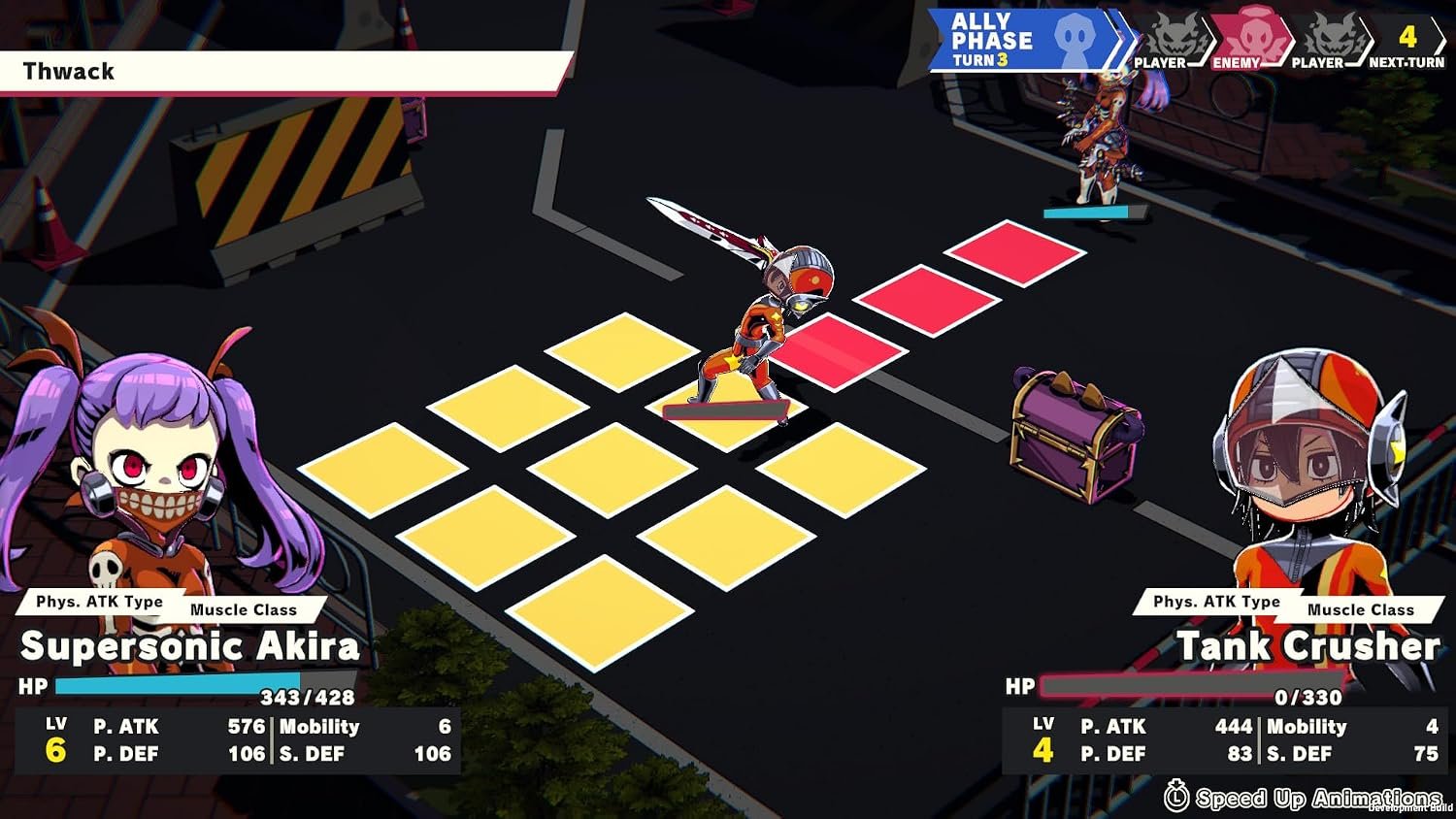
Product overview: Demons' Night Fever on PS5
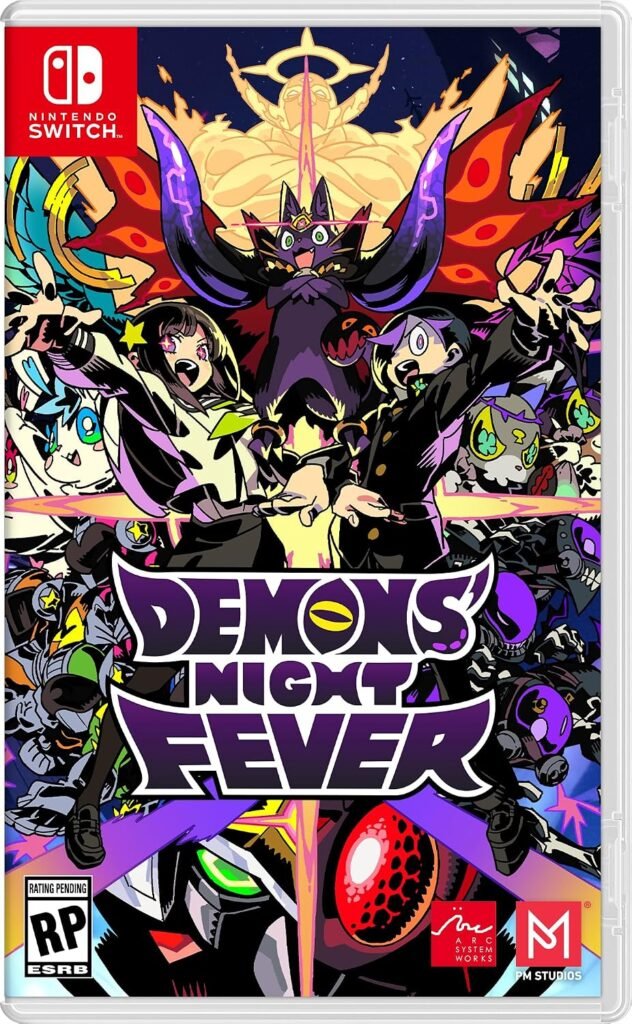
Demons’ Night Fever – PlayStation 5 is a strategy RPG with a striking central idea: you are not preserving a noble party at all costs, but building power through deliberately evil choices. The listing gives a price of $39.99 and a release date of October 22, 2026. Because that date has not arrived, you should treat the premise and listed systems as confirmed product claims, not as proof of finished-game quality.
The game follows Killshiro Katanaka, a gloomy young man who despises the world and forms a pact with the Devil after their interests align. That setup points toward betrayal, dark comedy, and shock-driven scenarios rather than conventional heroic fantasy. The product description also promises a world that changes from chapter to chapter, including transformations involving monsters, Super Rangers, witches, and Magical Girls.
At this stage, the asking price is best viewed as an entry point, not a confirmed bargain. You still need launch information about campaign length, replay value, technical performance, post-launch content, and whether alternate editions will appear. The early position is straightforward: this looks worth watching if you enjoy unusual tactical systems and villain-focused stories, but waiting is sensible if you dislike paying for an unreleased game.
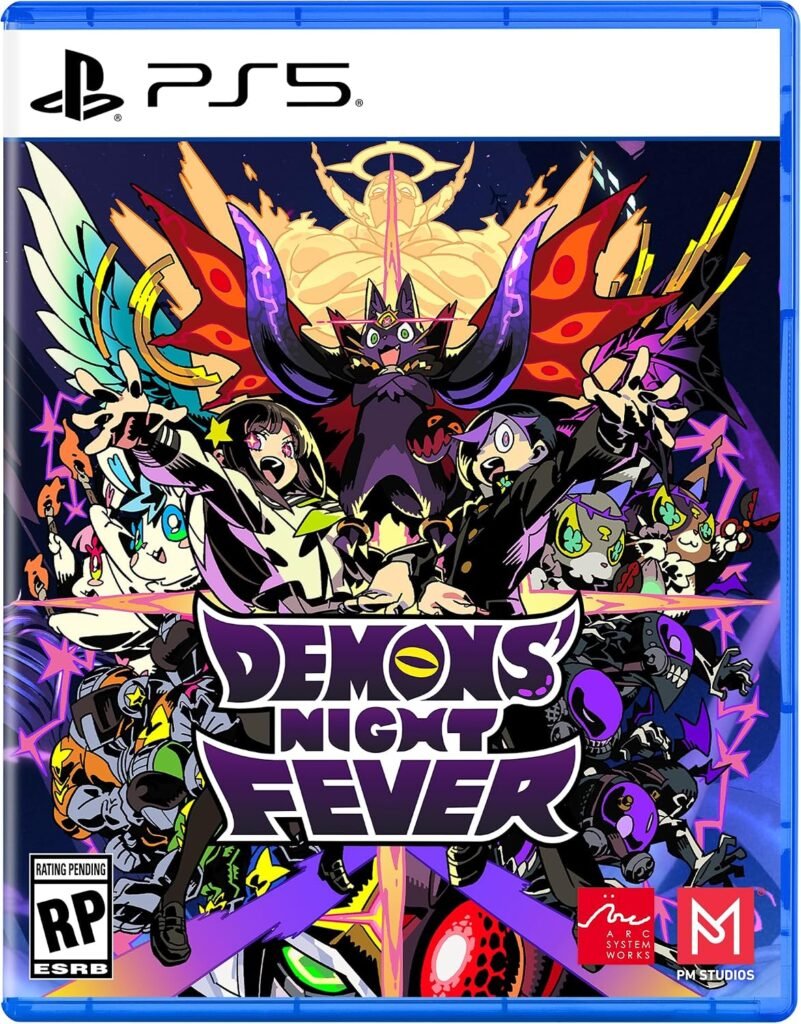

Demons' Night Fever gameplay and story premise
Killshiro is presented as a character who has already rejected the world before the game begins. His pact with the Devil is not an accidental detour into darkness; it forms the basis of the campaign. The description repeatedly frames evil as an active tool, asking you to kill enemies and allies and to abandon ordinary moral constraints.
That makes corruption more than background flavor. Your decisions are supposed to affect combat, character growth, and the way you approach each chapter. The most interesting question is whether the story meaningfully responds to those choices or simply uses immoral language to decorate a conventional battle system.
The chapter structure could keep the campaign from becoming a repeated march through similar maps. After defeating a boss, the situation is said to transform completely, with examples such as becoming a monster to defeat Super Rangers or becoming a witch to crush Magical Girls. Those scenarios sound varied on paper, but the finished review needs to establish whether they change objectives, unit abilities, enemy behavior, and progression—or merely alter the presentation.
You should therefore separate strategic consequence from provocative presentation. Dark humor can make a game memorable, but it cannot replace meaningful tactical choices. The strongest version of this idea would make each chapter ask you to rethink your army; the weakest would reuse the same solution under a different theme.
Key features deep-dive: the Peon Exploitation System
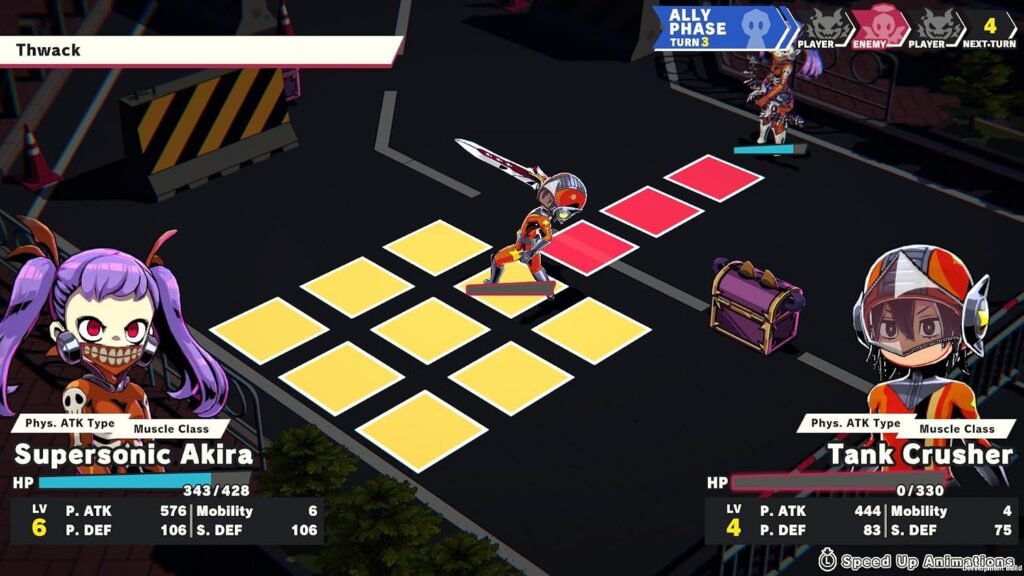
The Peon Exploitation System is the feature most likely to distinguish Demons’ Night Fever from more familiar tactical RPGs. During battle, you can apparently sacrifice allied Peons by detonating them manually, damaging or wiping out enemies in the blast. This turns a friendly unit from a protected asset into a possible weapon.
The risk-and-reward loop is clear even though the practical rules are not. Sacrificing a Peon reduces your current numbers and may compromise future turns, yet the listing says Peons become stronger when killed and reincarnate. If that claim is supported by useful progression, losing a unit could be a calculated investment rather than a simple mistake.
Before buying, you should look for launch reviews that answer the details the listing omits:
- How large is the detonation range, and can the blast harm allied units?
- Are there cooldowns, positioning requirements, or setup costs?
- Do different Peon types create different effects?
- Is self-sacrifice optional, or does the difficulty push you toward it constantly?
The system could be excellent for players who enjoy unconventional turn-based tactics. It could also become repetitive if detonation is almost always the strongest answer. The decisive test is whether preserving, reincarnating, positioning, and sacrificing Peons all have credible uses across different encounters.

Building an ultimate evil army
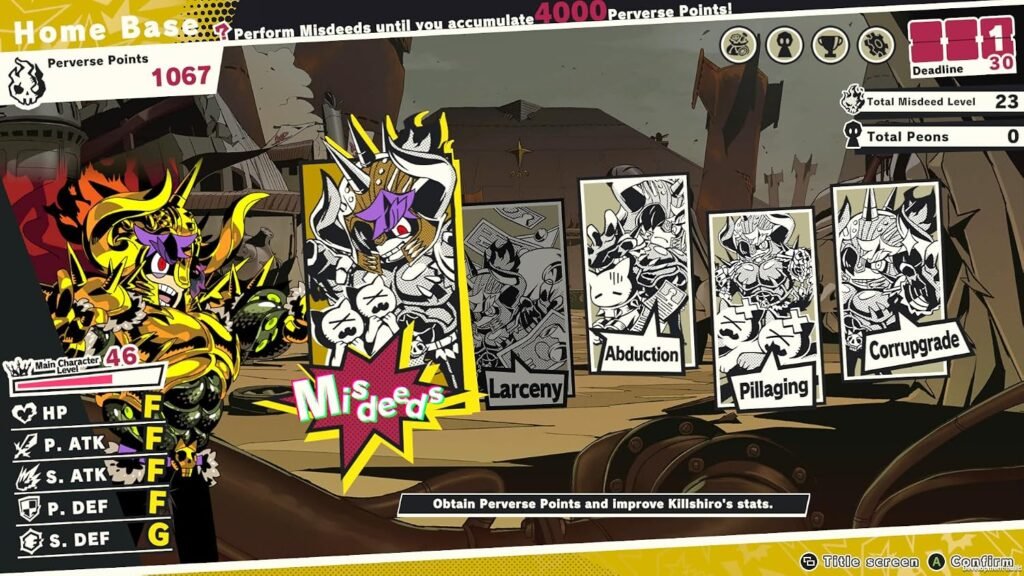
Between battles, you are expected to develop a base and spend Perverse Points earned through misdeeds. This creates a potentially valuable connection between what you do in a mission and how your army grows afterward. Instead of treating combat and management as separate modes, Demons’ Night Fever appears to make immoral behavior part of the resource economy.
A strong base system should force choices rather than provide a single upgrade route. You might have to decide whether to improve immediate combat strength, expand recruitment options, enhance reincarnation, or invest in facilities that pay off later. The supplied information confirms Perverse Points and army building, but it does not specify the facilities, upgrade paths, resource limits, or whether poor spending decisions can be reversed.
When launch reviews arrive, check for evidence of several viable builds. Can two players spend their points differently and still produce effective armies? Are some facilities useful only in specific chapters, or does one upgrade dominate the entire campaign? Does the base create meaningful preparation between missions, or is it just a menu for automatic stat increases?
- Read whether reviewers describe distinct army strategies.
- Check whether resources are plentiful enough to experiment.
- Look for information about respecs, refunds, or irreversible purchases.
- Compare base decisions with actual battlefield outcomes, not just menu descriptions.
If Perverse Points support multiple successful approaches, the management layer may give the $39.99 package much more staying power.
Abductions, pillaging, and time-limited preparation
Demons’ Night Fever also lists Abductions and Pillaging as suspicious activities that strengthen characters within a limited time. These systems could add pressure between major fights: you may need to decide whether to pursue optional misdeeds, prepare specific units, or save resources for a coming boss.
The phrase “limited time” needs careful interpretation. It could refer to individual missions, a preparation phase, a chapter schedule, or an overall campaign clock. Those possibilities produce very different experiences. A short mission timer can create urgency without permanent damage; a campaign-wide deadline could punish exploration and make experimentation much less attractive.
At release, look for testing that covers repeatability and scaling. Can you perform Abductions or Pillaging more than once? Do harder activities provide better rewards? If you miss one, is the lost opportunity permanent, and can a later activity compensate? These answers will determine whether the system rewards planning or simply pressures you into following a fixed route.
The listing does not confirm the number of activities, mission lengths, difficulty settings, or accessibility options. You should check those details after October 22, rather than assuming that “limited time” means a particular format. Ideally, the game will make consequences understandable before you commit to a choice and will give you enough information to plan without turning every optional action into a trap.
Languages, PS5 presentation, and expected usability
The confirmed language information is specific: Japanese voice is included, while the in-game text supports English, French, Japanese, Korean, Simplified Chinese, and Traditional Chinese. English text therefore appears supported, but English voice acting is not confirmed. That distinction matters if you normally expect a localized dub from a PlayStation release.
The product data does not state resolution, frame rate, performance modes, DualSense features, file size, online requirements, or PlayStation Pro enhancements. You should not treat any of those as included until the retailer or publisher confirms them. A strategy RPG may not need the same frame-rate targets as an action game, but stable menus, readable combat information, and responsive commands still affect how comfortably you can play.
Launch testing should focus on text size, subtitle contrast, menu clarity, information density, loading behavior, controller response, and save handling. These practical details are especially relevant when a game asks you to manage Peons, Perverse Points, time-limited activities, and several layers of progression.
Before ordering, confirm your console region and preferred text language on the product page. This is particularly useful when a listing may represent an imported or region-specific edition. Also check whether the physical or digital format matches your PS5 setup, since the supplied description does not identify a specific edition beyond the PlayStation platform.
What Customers Are Saying
There is no reliable customer consensus to report yet. Demons’ Night Fever is listed for release on October 22, 2026, so this pre-release review cannot honestly provide a star rating, review count, verified-buyer pattern, or hands-on impression. Any article claiming that customers already praise or criticize the game would be inventing evidence.
Instead, treat this as a launch-monitoring framework. Once purchasers have spent enough time with the campaign, look for detailed accounts of whether the Peon Exploitation System creates genuine choices or becomes a repetitive, overpowered shortcut. Comments should also be tracked about the writing, chapter transformations, dark humor, difficulty balance, menu usability, loading behavior, and the usefulness of base management.
Give more weight to reviews that describe a specific battle or progression decision than to one-line ratings. A buyer explaining why sacrificing a particular Peon changed a boss encounter offers useful information; a single-star score without context does not. If ratings become available, record the exact score and review count with a date stamp, then compare recurring positive and negative themes.
Keep shipping, packaging, delivery, and seller-service comments separate from opinions about the game. Those experiences may matter to your purchase, but they do not demonstrate whether the combat or story works. Revisit this section after launch, when a meaningful sample of verified purchasers has had time to reach the later chapters.
Who should consider Demons' Night Fever?
You are the intended audience if you enjoy tactical RPGs that give you unusual resources, villain-led storytelling, and progression systems built around morally bad decisions. The game’s appeal is not simply that it looks dark; it is that evil is presented as the route to stronger characters, a larger army, and more extreme scenarios.
Sacrifice-focused strategy fans have a particularly clear reason to pay attention. The Peon concept links losing allied units with future strength through reincarnation, potentially changing how you define success. In many tactical games, casualty prevention is the obvious goal. Here, the interesting decision may be knowing when a loss is worth more than survival.
You may also prefer this game if you want campaign variety. Each defeated chapter boss is described as changing the situation and introducing new forms of misdeed. That could make the journey feel more experimental than a standard heroic campaign, provided the transformations affect mechanics as well as tone.
Conversely, you should seek more information if you want a traditional heroic narrative, straightforward party preservation, English voice acting, or a confirmed multiplayer mode. A sensible decision rule is to wishlist the game, read launch reviews covering system depth and PS5 performance, and then decide whether $39.99 matches the confirmed content and replayability.
Value assessment at $39.99
At $39.99, Demons’ Night Fever enters the market at a price that could be reasonable for a focused strategy RPG, but the final value is not established. The listing does not confirm campaign length, replay modes, bonus content, downloadable content, or the number of substantial scenarios. You are paying for a distinctive premise before reviewers can verify how far the systems carry it.
The price would be easier to recommend if the finished game delivers a substantial single-player campaign, meaningful Peon and base-building choices, varied chapter situations, stable PS5 performance, and several effective army builds. Those elements would give the unusual premise room to develop rather than relying on its initial shock value.
Value would weaken if progression proves shallow, the campaign is brief, misdeeds have few consequences, battles repeat the same detonation solution, or technical problems interrupt play. Dark humor can attract attention, but it cannot justify the asking price by itself. Strategic depth must remain useful after the novelty of the premise fades.
Compared with Disgaea 7: Vows of the Virtueless, this title appears to be selling a more focused identity around exploitation and evil rather than relying on established long-term customization traditions. The Hundred Line: Last Defense Academy is another relevant name for shoppers who want a strategy game with a strong narrative emphasis, although the two projects appear to prioritize different kinds of progression. No unsupported price comparison should be made between them.
Preorder only if the concept is exactly what you want and the retailer’s return policy is satisfactory. For undecided shoppers, launch reviews remain the safer route.
How Demons' Night Fever compares with similar PS5 strategy games
The clearest comparison is Disgaea 7: Vows of the Virtueless. Players who prioritize deep character development, exaggerated combat systems, and long-term grinding may find that game a more familiar reference point. Demons’ Night Fever appears to differ through its Peon detonation mechanic, reincarnation premise, villainous choices, and chapter situations built around misdeeds. Neither should be declared technically superior without verified testing.
The Hundred Line: Last Defense Academy is a useful comparison for shoppers drawn to story-heavy strategy games. Demons’ Night Fever appears more focused on army exploitation, Perverse Points, base development, and morally corrupt progression, while The Hundred Line comparison is most relevant when your priority is narrative structure and character-driven strategy. Again, performance, ratings, and pricing should be checked separately at publication time.
Use four questions to choose between them:
- Is combat varied? Demons’ Night Fever needs its chapter changes and Peon types to create more than one reliable solution.
- Are there multiple viable builds? Its Perverse Point economy should support different armies rather than one dominant route.
- Does behavior matter? The evil actions should affect progression or scenarios, not just dialogue and presentation.
- Is depth understandable? Menus and combat feedback must explain complex systems without making them shallow.
Choose Demons’ Night Fever for sacrificial Peon tactics and an evil-centered campaign, Disgaea for broader established customization, or The Hundred Line for a more narrative-led strategy experience.
What to check before buying the PS5 release
Before placing an order, verify the release date of October 22, 2026, the listed $39.99 price, delivery timing, and whether the listing is for a standard physical or digital edition. Those details can change independently, so do not rely on an old search result or a bundle description that does not match the product you intend to purchase.
Confirm the language information next. The listing specifies Japanese voice and text in English, French, Japanese, Korean, Simplified Chinese, and Traditional Chinese. If English dialogue is essential to you, wait for explicit confirmation rather than reading the English-text listing as evidence of an English dub.
Then read launch reviews that test the systems rather than merely repeating the premise. You want concrete evidence about Peon detonation, Perverse Point spending, Abductions, Pillaging, boss-related world changes, and the balance between battles and base management. A review that reaches later chapters will be more useful than an early impression based on the opening hours.
- Check performance mode, resolution, loading times, save restrictions, and accessibility settings.
- Look for any online, account, or installation requirements.
- Compare detailed post-launch customer experiences, not just the average score.
- Reassess whether the confirmed campaign content justifies $39.99.
That final check matters because Demons’ Night Fever’s strongest selling point is also its biggest unknown: whether its unusual evil systems remain strategically interesting for the whole campaign.
Pros and Cons
Pros
- A distinctive Peon Exploitation System makes allied-unit sacrifice part of tactical decision-making.
- Chapter bosses are described as changing the surrounding situation, potentially giving the campaign greater variety than a standard sequence of battles.
- Perverse Points, Abductions, Pillaging, and base development could connect short-term combat choices with long-term army building.
- English, French, Japanese, Korean, Simplified Chinese, and Traditional Chinese text are confirmed, alongside Japanese voice.
Cons
- The game is unreleased, so there is no verified customer rating, review count, or hands-on performance evidence yet.
- The listing does not confirm campaign length, replay modes, technical performance, accessibility options, or post-launch content.
- Japanese is the only confirmed voice language; English is listed for text, not voice acting.
- The unusual sacrifice mechanics and deliberately immoral tone may not suit players who prefer conventional heroic strategy RPGs.
Final Verdict
Key Takeaways
- Demons’ Night Fever – PlayStation is listed at $39.99 for release on October 22, 2026, but its final value cannot be confirmed before launch.
- The Peon Exploitation System and reincarnation concept could provide unusual tactical choices, provided sacrifice is not the only effective strategy.
- Perverse Points, Abductions, Pillaging, and base management may create meaningful long-term planning, but their depth and limits are not yet specified.
- Japanese voice is confirmed, while English and five other languages are confirmed for text; English voice acting is not listed.
- Wait for launch reviews and substantive customer feedback if you are unsure about campaign length, PS5 performance, or replayability.
Frequently Asked Questions
Does Amazon sell real PS5?
Yes. Amazon sells genuine PlayStation consoles through its own listings and third-party sellers, but availability, condition, region, and seller status can vary. Check that the listing identifies the correct PS5 model and is sold by a reputable source before ordering.
How much does a PS5 really cost?
There isn’t one fixed PS5 price because the total depends on the console edition, retailer, bundle, and any current promotion. For this game review, the relevant listed price is $39.99 for Demons’ Night Fever – PlayStation 5, which is separate from the cost of the console itself.
What is the cheapest PS5 on Amazon?
The cheapest PS5 listing changes frequently, so you should compare the current prices of new, used, refurbished, Digital Edition, and disc-drive models. Also check delivery charges, warranty coverage, seller reputation, and whether the console is intended for your region rather than choosing by headline price alone.
What PS5 games are available on Amazon Prime?
Amazon Prime availability for PS5 games changes by country, subscription benefits, and publisher arrangements. The product information supplied for Demons’ Night Fever does not confirm Prime inclusion, so check the current game listing and your local Prime catalog before assuming it is included.
Disclosure: As an Amazon Associate, I earn from qualifying purchases.